
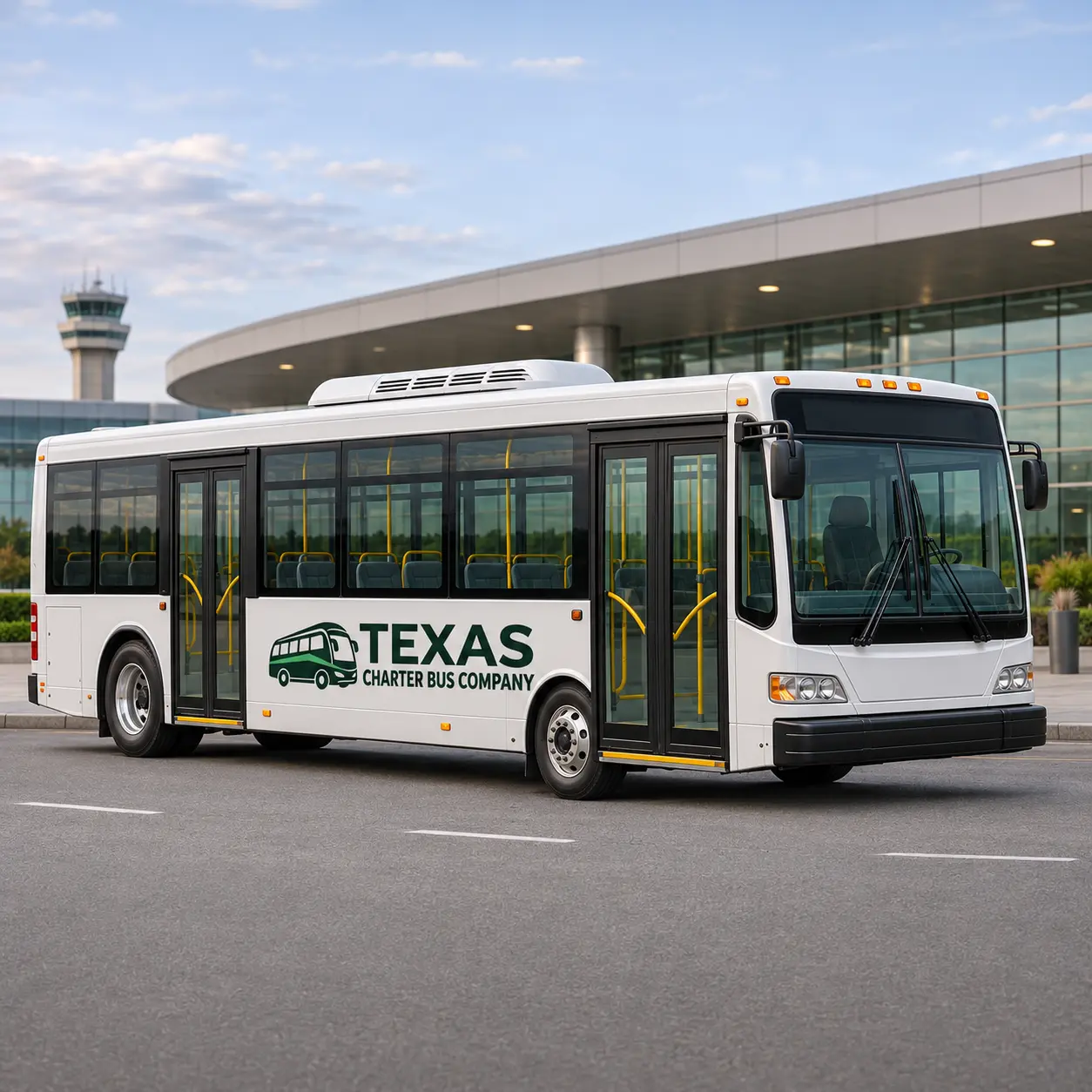
Shuttle Bus
| HOURLY PRICE | $110 – $250 |
|---|---|
| DAILY PRICE | $1,100 – $2,000 |
| Passenger Capacity | 20–40 Passengers |
| Best For | Airport Transfers, Hotel Shuttles, Corporate Transportation, Employee Shuttle Services, Convention Transportation, Campus Transportation, Hospital Shuttles, Wedding Guest Transportation, Church Groups, Private Events |
| Amenities | Air Conditioning, Heating, Reclining Seats (Select Models), Wi-Fi (Available), USB Charging Ports, Power Outlets, PA System, Reading Lights, Individual Air Vents, Tinted Windows, Overhead Storage, Cup Holders |
| Driver | Professional CDL-Licensed Driver Included |
| Seating | Comfortable Forward-Facing Seats with Ample Legroom |
| Luggage Capacity | Rear Luggage Storage with Overhead Compartments (Select Models) |
| Interior | Modern Cabin with Comfortable Seating and Wide Center Aisle |
| Ideal Group Size | Small to Mid-Sized Groups, Corporate Teams, Hotel Guests, Airport Travelers, Event Attendees |
| Vehicle Type | Shuttle Bus |
| Trip Type | Recurring shuttle loops, Scheduled transfers |
Description
Does a shuttle bus fit your Texas trip?
A shuttle earns its place when the same door opens more than once. Think of a hotel group heading to a meeting in two waves, or a parking lot filling steadily before an evening reception. People want to know where to wait, whether their belongings will fit, and when the next bus will come. Those details are a good place to start when choosing a Texas shuttle bus rental.
Charter Bus Company Texas works with charter bus operators to match your trip with an available vehicle. Tell us who rides together, what they carry, and which arrival time matters most. Two groups of twenty may need different buses if one is carrying overnight bags and the other is making a five-minute ride from a parking lot.

What are you renting?
A private shuttle bus carries your group between agreed pickup and drop-off points. A reservation can cover one transfer, several timed departures, or a repeating circuit. “Shuttle” describes how the bus is used. The vehicle offered may be a minibus or another passenger bus with a suitable layout. Your quote should identify the seating and equipment for your particular trip.
Start with your busiest departure
Write down the largest group that will board together. Beside it, list the things that must travel on that run. Finally, add the time everyone needs to be inside the destination. With those three details, we can discuss seat count, storage and departure times before you send a full itinerary. Request a shuttle bus quote if you already have your dates.
One transfer, timed departures, or a continuous loop?
A transfer for a group that is ready together
A single private transfer suits a group with one meeting point and one destination. Picture a training team checking out of a Fort Worth hotel after breakfast. The organizer can collect room keys while the bags are loaded and take a head count before the bus pulls away. If half the team has a later checkout, mention that early. A second departure may serve the group better than having the first passengers wait aboard.
Timed departures for known waves
Choose departure times when you can divide riders into groups in advance. A rehearsal dinner might have a family departure followed by a later pickup for other guests. Give each group its own boarding time and tell guests whether their return trip is assigned. A sign that says “dinner shuttle” is less helpful than one that names the destination and departure. Guests can find the correct bus while the driver gets ready for the next run.
A loop for people who arrive gradually
A parking shuttle can circulate while visitors park and walk to the stop. Draw the entire circuit, including the empty return leg, and mark where the driver can wait between pickups. Record the end of boarding as well as the start. Someone who parks just before service ends still needs time to walk to the bus. If return service begins several hours later, put the restart time on the invitation and at the drop-off point.
A trip may use all three patterns. Conference speakers might need a single early transfer, delegates a morning loop, and staff a timed pickup after packing up. Explain each movement separately in your request. It gives the operator a chance to cover a smaller movement with a smaller vehicle or adjust the order of runs.
How many people can the shuttle move before the doors close?
The seat count tells you how many passengers can travel on one loaded run. To estimate how many people can reach a venue by a deadline, you also need a complete circuit time. Include boarding at the first stop, driving to the venue, unloading, returning and getting back into position. A short drive can still produce a long wait if only one vehicle can use the loading space.
Work through a sample hotel loop
Imagine a bus with 20 confirmed passenger seats. For this example, allow five minutes to board, eight minutes to drive to the venue, four minutes to unload, eight minutes to return and five minutes to get back into position. That gives a 30-minute circuit. If boarding opens at 8:00, the first group finishes unloading at 8:17. The next group finishes at 8:47. A third group would finish at 9:17.
That timing matters if 55 people need to be inside for a 9:00 presentation. Two runs deliver 40 people, leaving 15 who would miss the start even before allowing for the walk from the curb. Possible fixes include an earlier first boarding, a larger confirmed vehicle, or another bus that can load at a different time. The venue’s earliest entry time may rule out the first option.
Check the busiest fifteen minutes
An average of 40 riders per hour sounds manageable until 35 of them appear after the same session. Ask the registration team which sessions dismiss together. Then compare the expected queue with the space available for people to wait. Two smaller buses spaced apart can reduce the interval between rides, provided the curb can accommodate both movements. If the buses depart together, passengers who just missed them still face a full circuit’s wait.
Use these numbers only as a worked example. Ask the operator to review your actual addresses, boarding needs and expected traffic before you put a frequency on signs. A posted departure time works well for assigned groups. A service window with a host giving updates may be easier for a changing crowd.
Read the vehicle layout before choosing the seat count
The entrance changes how a run works
Ask for a photo of the passenger entrance and the first few rows of the proposed bus. Look at where guests can pause after boarding, where a host would sit, and how far someone needs to walk to an open seat. For an awards dinner, a group in formal clothes may appreciate some extra boarding time. A team carrying sample cases may need someone at the storage area before the first passenger steps aboard.
Give belongings their own place
Make a separate count for people, rolling cases and bulky items. Airport passengers often have more than one piece each, while a small exhibition team may bring display tubes or boxes that do not stack. Share the dimensions of the largest items. Ask the operator where each type will travel and whether the proposed layout leaves every required passenger seat available. Keep aisles and doorways clear when agreeing on a loading plan.
Ask about the exact features your group will use
If you need a microphone for a site tour, charging for a field team, or climate control during a waiting period, list the requirement in your request. Ask which features the operator can confirm for the assigned vehicle. For a short ride, door placement and storage may influence the day more than entertainment equipment. For repeated runs, the ability to identify the correct bus from outside can matter as much as its interior.
Match the layout to the alternative
A minibus rental is worth comparing when one compact group will travel together and the venue has a tight loading area. A full-size charter bus deserves a look when a large group must leave at once or take substantial luggage on a longer ride. Give both options the same passenger and baggage list. You can then compare what each assignment will actually carry.
Walk the pickup from the passenger’s point of view
Hotel entrance to meeting room
A street address can lead a guest to reception while sending a driver to a service entrance on the opposite side of the building. Ask the hotel to name the group entrance, describe the nearest landmark and confirm where a bus can wait. Walk from that point to the meeting room if you can. A shuttle that reaches the curb at nine may still leave guests several minutes from check-in.
Remote parking to event gate
For a Texas fairground or outdoor venue, draw the passenger route from parked car to shuttle stop and from drop-off to ticket scanning. Where will visitors queue if the first vehicle fills? Can people find the return stop after dark? Ask the venue who can approve a sheltered waiting location and how staff will direct passengers if the pickup point changes. A photo of the gate often communicates more than a lot number alone.
Airport pickup with checked bags
Give the coordinator the arrival flights, expected luggage and a mobile contact who will travel with the group. Arrange a way for that person to report when everyone has collected their bags and reached the agreed meeting point. Two flights landing at the same time can produce very different boarding times. For a trip centered on flights and terminal coordination, see our airport charter bus rental page.
A curbside note guests can use
“After the workshop, meet outside the west lobby by the blue registration flag. Boarding opens at 4:10 for the hotel departure at 4:20. If you leave through the exhibit hall, follow the indoor signs back to the west lobby.” Adapt that example to the actual entrance, sign and time. Give the same instructions to front desk staff so a guest asking for directions hears one consistent answer.
Three shuttle schedules with different pressure points
Houston conference with a split evening program
Consider a conference group staying at one hotel. Everyone needs the first session, but some attendees will go to a sponsor dinner while others return after the afternoon program. Plan the morning around the check-in deadline. Build the afternoon around destination choice. Have hosts count the two return groups before assigning vehicles. It could make sense to send one full bus to the hotel and hold a smaller group for dinner, subject to the operator’s agreed schedule.
Hill Country wedding with an early return
A ceremony creates a firm inbound deadline. The return trip is more personal. Grandparents, guests with young children and people helping with cleanup may all leave at different times. Ask for an early hotel return and a final departure as separate items. Identify someone at the reception who knows which guests expect the early ride. Couples working through the rest of the itinerary can use our wedding transportation page.
North Texas workplace with overlapping shifts
For an employee shuttle linking a satellite lot and a workplace, make two columns for every departure. One records how many people must clock in. The other records how many have finished and need a ride back. There may be a useful passenger load in both directions, but the outgoing team might still be inside when the incoming bus unloads. A short hold could cover both groups if it leaves enough time for the next shift.
For a recurring arrangement, name the person who updates the operator when overtime, a holiday roster or a temporary gate closure changes the pattern. A schedule that fits an ordinary Tuesday can produce empty trips on a shorter Friday. Bring one normal day and one exceptional day to the quote discussion. For meetings and company events involving several movements, visit our corporate charter bus rental page.
Plan boarding for the people making the trip
A passenger may be able to ride comfortably once aboard and still need help finding the right entrance. Invite travelers to share practical boarding requirements privately with the organizer. A useful question is “What should we arrange for your pickup and ride?” That makes room for someone who needs a lift, a shorter walk, extra boarding time or written stop information without asking them to explain a medical history.
Confirm equipment and usable seats together
When a passenger will travel seated in a wheelchair or another mobility device, tell the booking team early. Ask the operator to confirm a suitable vehicle, boarding equipment, securement positions and passenger seating in the requested configuration. Include companions in the count. If the venue proposes a different loading space, check that the vehicle can deploy its boarding equipment there and that passengers have a clear route from the stop to the entrance.
Make the return as clear as the outbound ride
A familiar entrance looks different in the dark or after temporary barriers go up. Give riders a landmark they can recognize on the way out. Use a large destination name alongside any route color, and provide return instructions in a format guests can keep on their phones. For a group using more than one language, a short translated stop name and a clear photo may be easier to use than a long paragraph.
Agree on who handles a change
Choose one organizer who can approve a revised stop, and one venue contact who can verify access. Give passengers the organizer’s agreed contact channel. If weather or construction changes the approach, the organizer can confirm the new meeting point and send a single update. For road conditions on the travel date, consult DriveTexas and ask the operator how a reported closure affects your schedule. Our safety commitment explains the company’s approach to trip planning.
What changes a Texas shuttle bus rental quote?
A useful quote connects a vehicle to a specific job. Two planners might request the same number of seats and receive different proposals because one needs a single afternoon transfer and the other needs morning and evening coverage. Start with the service date, pickup area, first boarding time and final release time. Include the quiet hours between trips. The operator can then explain how those hours are treated in the proposal.
Time with the group and time getting into position
A hotel-to-venue movement might cover only a few passenger miles. The assigned vehicle also has to reach the first pickup and leave the final stop. A rural venue, an early start or a late finish can change that part of the assignment. Ask whether the quoted total includes travel to and from the service area, any minimum booking period and the time the bus spends waiting for the group.
One long booking or two service windows
If a morning drop-off finishes before breakfast and the return starts after dinner, request pricing for both schedules you could actually use. One option might keep the vehicle available during the day. Another might cover only two defined windows, subject to availability and minimums. Write down whether you need a midday trip for staff or supplies. A proposal that releases the bus after breakfast cannot automatically cover an unplanned noon departure.
Put both proposals on the same footing
Check the vehicle layout, confirmed seats, service hours and number of departures beside each price. Ask how parking, tolls, venue charges, gratuity and additional time are handled. Record the agreed cutoff for requesting extra service and who may authorize it. For more context, read our charter bus rental cost guide or browse the Texas charter bus blog. Review the refund and cancellation policy alongside your booking terms before committing.
Put the quote request and passenger notice side by side
The operator and the passengers need different versions of the same trip. The operator needs the complete movement from first pickup to final release. Passengers need the small set of details that helps them board the right vehicle. Preparing both versions often reveals a missing decision, such as who is riding on the final run or whether the host is counted among the seats.
A sample request you can adapt
“We need a private shuttle for a Friday workshop in Austin. There are 36 attendees and two hosts staying at one hotel. Everyone needs to be checked in by 8:45. We can split the group into two assigned departures. Four guests will bring rolling cases for onward travel. We need a return for 12 people at 3:30 and the remaining 26 at 5:00. Please confirm the proposed seats, storage and earliest boarding time.”
Add the actual date, both street addresses, approved entrances and any boarding equipment required. Mention which details are estimates. If registration is still open, give the current count, the highest likely count and the date you expect a final number. That lets the booking team explain what happens if the group grows beyond the first vehicle’s capacity.
What the attendee should receive
Send the assigned departure, boarding location, destination, luggage instructions and return plan in one message. Include the day as well as the time for events that run past midnight. Tell passengers when to arrive at the stop and when the bus is due to leave. If the first departure is for a named group, say how the host will check riders in. A short, accurate message is easier to follow on a crowded sidewalk.
Questions before you reserve a private shuttle
Can we use a shuttle bus for just one trip?
Yes, you can request a one-way group movement. Include the pickup, destination and any time the bus needs to remain available after arrival. Ask for the applicable minimum and clarify when the assignment ends. If a return is possible but undecided, request it as a separate option so you can compare the cost before inviting guests to use it.
Does every shuttle have room for airport luggage?
Storage varies with the vehicle and seating configuration. A head count alone does not tell the operator whether the luggage will fit. Count checked bags and carry-ons separately and identify bulky items such as exhibition cases. If you want to leave bags aboard while the group attends an event, ask whether that arrangement is available and who will have access.
Can one bus serve two hotels?
It can work when the first pickup leaves enough seats and time for the second. Ask both hotels to confirm their entrances and compare the resulting arrival time with your check-in deadline. For the return, tell riders the stop order. A guest at the second hotel needs to know the bus will continue after the first stop.
How do we arrange the final departure?
Work backward from the time guests can reasonably reach the pickup. Allow for coat collection, a walk from the venue and any staff who must close the room. Choose someone to make a final announcement and confirm the agreed release time with the driver through the booking contact. If cleanup staff finish later, identify their travel plan separately.
What should we send to check availability?
Send your travel date, pickup and drop-off addresses, busiest passenger count, luggage needs and service window. Include a phone or email for the organizer and flag any flexible details, such as the order of hotel stops. Get a Texas shuttle bus quote for vehicle availability and trip pricing. For a question about an existing request, contact the booking team with the name and date used on the request.
Reviews
There are no reviews yet.