
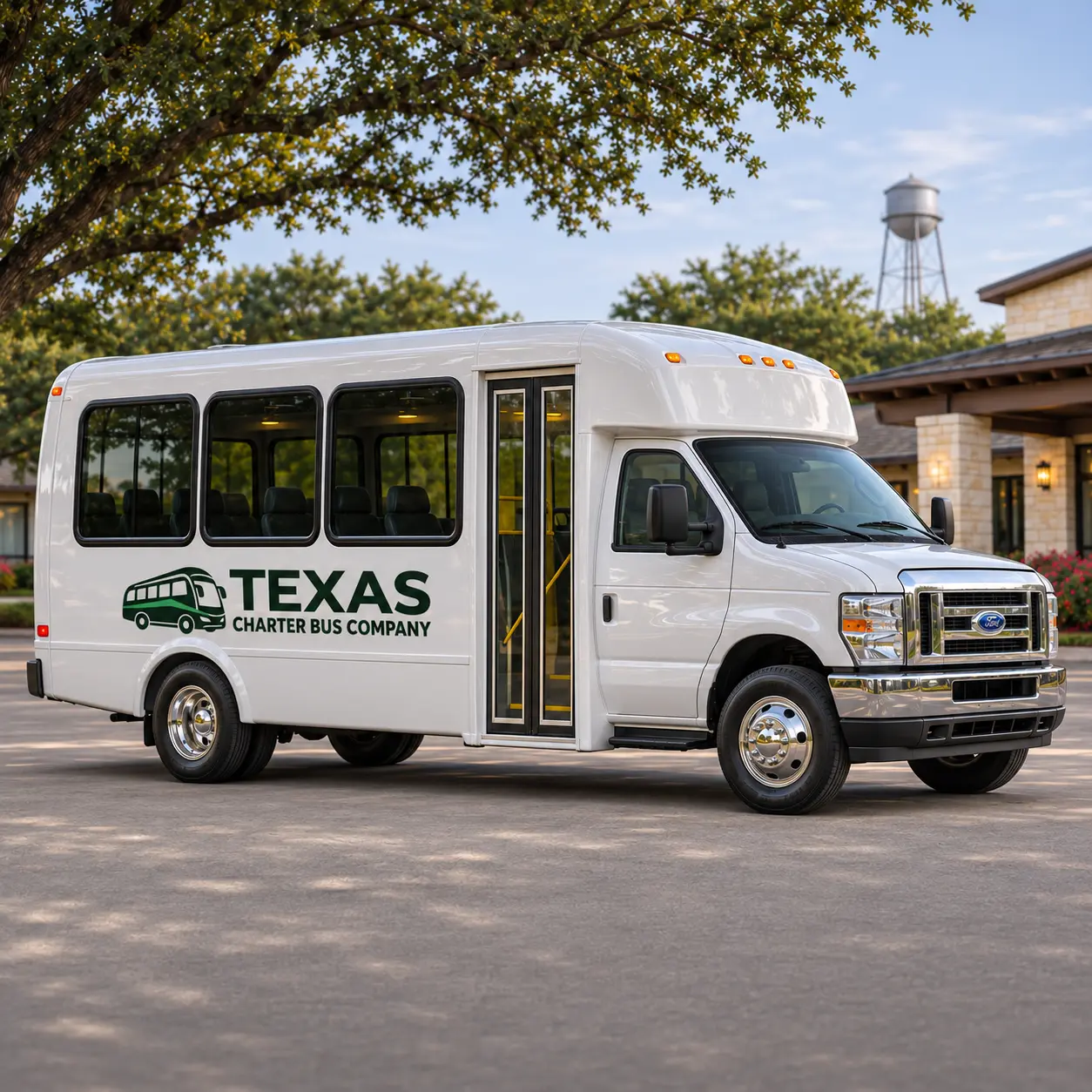
Mini Bus
| HOURLY PRICE | $120 – $220 |
|---|---|
| DAILY PRICE | $1,000 – $1,800 |
| Passenger Capacity | 18–30 Passengers |
| Best For | Airport Transfers, Corporate Transportation, Wedding Shuttles, Employee Shuttle Services, School Field Trips, Church Groups, Family Reunions, Sports Teams, Hotel Transfers, Sightseeing Tours, Convention Transportation, Private Events |
| Amenities | Air Conditioning, Heating, Reclining Seats, Wi-Fi (Available), USB Charging Ports, Power Outlets, TV Monitors (Select Vehicles), PA System, Reading Lights, Individual Air Vents, Overhead Storage, Tinted Windows, Cup Holders |
| Seating | Comfortable Reclining Seats with Spacious Legroom |
| Luggage Capacity | Rear Luggage Compartment with Limited Overhead Storage |
| Ideal Group Size | Small to Mid-Sized Groups of 18–30 Passengers |
| Driver | Included |
| Vehicle Type | Mini Bus |
| Trip Type | Local group outings, Scheduled transfers |
Description
Choosing a minibus for your Texas group
A Texas minibus rental makes sense when the group can share a departure time as well as a destination. Picture a project team leaving one Houston hotel for a morning site visit. With a driver and one pickup, the organizer can check the team in at the lobby, give the site host a single arrival estimate, and bring everyone back together. A group spread across six hotels has a different decision to make, even if it has exactly the same number of people.
Our minibus is listed for 18–30 passengers and comes with a driver. Through our network of charter bus operators, we can look for a vehicle that fits your date, boarding needs and baggage. Start with the part of your itinerary that asks the most of the bus. That could be the afternoon when every guest is on board, the airport run with the largest cases, or the pickup where someone needs step-free boarding.
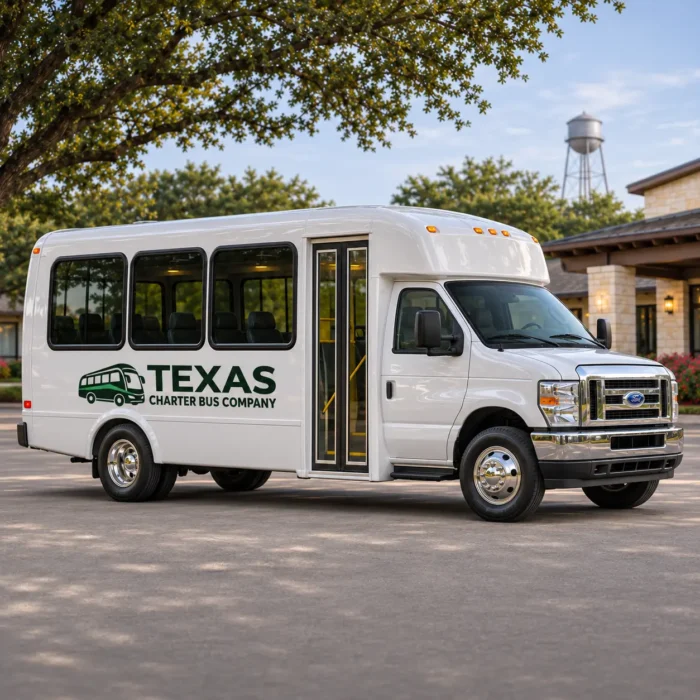
Start with the busiest ride
For a family weekend, the welcome dinner might draw 18 guests and the Saturday outing 26. If everyone needs to ride together on Saturday, use 26 when asking about seats. Then describe Friday separately. An operator can consider one vehicle for the whole weekend or different arrangements for each day. That detail gives you a useful comparison before you commit to either plan.
Give the driver a workable destination
A street address can cover an entire campus, resort or business park. Name the building, entrance and person who can confirm where a minibus may stop. If a venue sends a loading map, pass it along with your request. The entrance needs to accommodate the actual vehicle’s height, turning space and boarding side. That matters even when a passenger car has used the same entrance before.
Say what would change your choice
If you would choose a larger bus to gain luggage space, say so. If your team needs separate evening returns, include both times. If a guest needs a particular boarding arrangement, describe it before booking. Those details help the operating company explain which configuration it can supply and give you a practical basis for accepting a quote.
How many seats and how much luggage?
An 18-passenger minibus and a 25-passenger minibus answer different headcounts. Neither number tells you how many large suitcases the vehicle will take. Our product listing describes rear luggage space and limited overhead storage. Ask us to match your inventory to the particular vehicle. A day group carrying handbags uses space very differently from a smaller party leaving on a weeklong cruise.
Count every occupied seat
Include the host, group leader, interpreter, coach and anyone joining at a later stop. For example, 23 guests plus a photographer and coordinator means 25 people need seats on the busiest leg. If your RSVPs are still changing, give a confirmed number and an upper estimate. Ask when the operator needs the final count and what happens if the original vehicle becomes too small.
Describe what goes in the rear compartment
“Twenty bags” could mean twenty backpacks or twenty checked cases with wheels and rigid shells. Write down each kind separately. For an unusually long or bulky item, send its dimensions and mention whether it folds. A golf travel cover, presentation stand or double stroller can affect the choice of vehicle even if everybody else brings just one small bag. Have the operator confirm the load before you assemble the group at the curb.
Match boarding needs to the layout
Ask your travelers privately about steps, handrails, mobility equipment and wheelchair spaces. Share the practical requirements with the booking team, including whether someone will travel seated in their own wheelchair. Ask for confirmation of the boarding equipment, securement layout and remaining passenger seats for the proposed vehicle. Also check that the pickup and drop-off points have room to use the equipment.
A sample request for 25 travelers
“We have 21 colleagues, two presenters and two event staff. We’ll have 18 roller cases, four poster tubes and one folding display. Everyone arrives at the hotel together, but the two presenters need their equipment first.” A note like this gives the operator something concrete to review. It also tells your trip lead which items should be easiest to retrieve. Before accepting the quote, check that its passenger and baggage assumptions match the note you sent.
Minibus, Sprinter, shuttle bus or full-size coach?
Begin with the journey you need to run. Perhaps 19 employees need a ride to a workshop, while only eight will stay for dinner. A minibus can suit the outbound group. For the return, you might keep the same bus, schedule two departures, or request a smaller vehicle for the late travelers. The better arrangement depends on the time between rides and what each option costs across the whole day.
When a Sprinter van is worth comparing
For a small leadership team arriving together, a Sprinter van with driver is worth a look. Count the cases and the seats the team will occupy. If two assistants and a set of display materials are joining at the last minute, the compact option may lose its advantage. Ask for the available van configuration alongside a minibus quote so you can compare both against the same passenger list.
When the job is a continuous shuttle
A minibus describes the vehicle. A shuttle describes the service you want it to run. For a staff parking lot, tell us the peak number of people arriving in one wave and how long they can wait. A vehicle that works well for a single dinner transfer may need a second bus to maintain a short interval between departures. Explore our shuttle bus options when frequency matters more than a reserved seat for the whole outing.
When a charter bus earns its extra space
Compare a full-size charter bus when cases, instruments or athletic gear dominate the load, or when splitting the group would leave a team leader on the wrong vehicle. Two minibuses can be practical when guests follow different schedules. A larger coach can simplify the headcount when everyone follows one itinerary. Compare the number of drivers, loading points and departure times each plan would require.
What to ask about the ride itself
For a short transfer, easy boarding and a clear exit plan may settle the decision. For a longer outing, ask about reclining seats, air conditioning, charging access and planned breaks. If you need Wi-Fi for a presentation or a microphone for a guide, request confirmation for the assigned minibus. Keep an offline copy of essential material. For travelers choosing among several classes, the Texas vehicle directory puts the alternatives in one place.
Build a shuttle schedule that fits the actual loop
A wedding planner asks for a minibus every 20 minutes between a hotel and a reception. The drive looks short on a map, but each circuit includes boarding at the hotel, driving to the venue, unloading, and returning to pick up the next group. Start by calculating the whole circuit. Then decide whether to change the interval, add a vehicle or move the first departure earlier.
Work through a 34-minute circuit
Suppose the outbound drive takes 12 minutes and the empty return also takes 12. Allow six minutes to board at the hotel and four to unload at the venue. The illustrative cycle is 34 minutes before traffic or other delays. If the bus holds 24 guests and 48 need to arrive before the ceremony, the second group departs approximately one cycle after the first. Two full loads work only if the venue deadline leaves enough time for that later arrival.
Put a name next to each departure
For a fixed event, assign guests to the first or second hotel pickup. Give the early trip to people who have a job at the venue or would appreciate more time to settle in. Tell the second group where to wait. A simple list helps the host spot a missing guest without keeping a full bus parked while someone checks three different hotel entrances.
Plan the ride back separately
A reception rarely empties in the same pattern in which guests arrived. Some families want an early return, while a large group may leave after the final song. Ask the venue when the bus can enter for each pickup and whether drivers can wait on site. Put the final departure time and meeting point in the guest message. Include a coordinator’s phone number for anyone who misses the arranged ride.
Apply the same math to a work shift
For an employee shuttle, count people within the busiest part of the shift change. Forty riders arriving across two hours present a different problem from forty people needing to clock in within ten minutes. Ask the site manager when staff can enter the property and how far they walk after drop-off. Build the timetable backward from that final step. For ceremony and reception logistics, see our wedding transportation page.
Airport transfers with people and bags accounted for
An airport pickup begins when the group is ready to board. A flight arrival time is only the first piece of that picture. People still need to leave the aircraft, collect checked bags and reach the agreed meeting point. When asking about a Texas airport minibus rental, include the airport code, airline, flight number, date and group contact. If the travelers arrive separately, send a short list of flights and say who can wait for whom.
One arrival or two pickup windows?
Imagine a Dallas meeting with 16 travelers landing in the morning and six arriving much later. Keeping the first group at the airport may save a departure, but it could cost them the opening session. Ask for one combined pickup and two timed pickups as separate options. Compare the waiting arrangements, vehicle time and what happens if the second flight changes. Give the organizer authority to choose between the agreed options on the day.
Write instructions a newcomer can use
“Meet downstairs” can mean different things to guests arriving at different terminals. Give the confirmed terminal, level, door or zone and a contact number. Include the name under which the transportation was reserved. The operator should confirm the commercial vehicle pickup for your trip. For Dallas Fort Worth arrivals, use the official DFW ground transportation guide when checking your arrangements.
Allow time to hand off the luggage
At the hotel, a group with checked bags needs an unloading point and a place to gather cases. Ask whether the vehicle can stop near the entrance the group will use. When some people are going straight to a meeting, separate their work bags from the luggage that can go to storage. Tell the hotel which guest or coordinator can identify the bags if rooms are still being prepared.
Reverse the plan for an airport departure
For the flight home, work backward from the group’s intended arrival at the terminal. Include hotel checkout, bringing bags downstairs, loading, the drive and any second terminal stop. A published bus departure time is much easier to keep if passengers know when to be in the lobby with their bags. Visit our airport group transportation page for help arranging the rest of the transfer.
What does a Texas minibus rental cost?
Use these published minibus rate ranges to start a budget. The trip quote establishes the price for your date, itinerary and assigned vehicle. A two-hour dinner does not necessarily mean two billable hours. Ask about the minimum booking period, the time at which billing begins and ends, and the treatment of gaps between passenger trips.
Compare the complete time window
Take a team leaving a hotel at 8 a.m. and returning at 4 p.m. It may spend only a fraction of those eight hours traveling. If the vehicle stays available between stops, the quote may account for that time. If the team can release the vehicle, ask for separate morning and afternoon transfers. Read both quotes carefully enough to see whether your afternoon departure is fixed or can move when the meeting runs late.
Put the estimates on the same basis
One proposal may include parking while another lists it separately. Ask about tolls, venue charges, gratuity, overtime, and lodging for the driver if the trip takes more than one day. Find out who pays each item and on what basis. If you want a per-person figure, divide the comparable trip total by the number actually paying. Hosts, chaperones and invited speakers may need seats without contributing to the fare.
Decide what flexibility is worth
A dinner reservation at a set time makes a fixed return easier to arrange. A tournament finish is harder to predict. For that trip, ask what it costs to hold the vehicle until a specified time and how an extension would be authorized. Give one person responsibility for approving additional time. This prevents a well-meaning passenger from requesting another stop without knowing the effect on the bill.
Check the terms before collecting payments
If you are collecting money from individual travelers, confirm the due dates and cancellation conditions before sending a payment request. Read the refund and cancellation policy alongside the terms in your proposal. Keep the written quote with the itinerary version it covers. If the group changes hotels or the final passenger count grows, ask for the change in writing so the organizer and operator can work from the same figures.
Three Texas itineraries, three different vehicle decisions
Houston business visit with a change of clothes
A group arrives at a hotel, tours a facility and goes straight to dinner. The relevant question is where the bags will go during the tour. If the hotel can take checked luggage early, the team may only need room on board for laptops and a few garment bags. If every suitcase has to travel all day, ask for storage confirmation before choosing a vehicle. Send the facility’s visitor entrance and the name of the person meeting the bus. For the agenda beyond the ride, see our corporate group transportation page.
Austin rehearsal dinner with two hotels
Two hotels can look like an easy addition until the first group is dressed and waiting while the second is delayed. Ask each hotel for one lobby host and a specific gathering time. Set the dinner arrival first, then work backward through both pickups. If the restaurant has a short loading area, identify a nearby meeting point that the venue and operator approve. Share the same return location in the invitation so guests can find the vehicle after dark.
San Antonio family outing with an optional afternoon
The morning museum visit is for everyone. After lunch, some relatives want to return to the hotel and others plan to stay out. Put the split in the itinerary before requesting a rate. Check who will accompany each group and whether anyone will need an item left on board. If passengers want an extra sightseeing stop, have the host clear it with the operator first. A single change can shift both the early return and the later pickup.
What belongs in the guest message?
Write one passenger-facing message for each departure. Include the day, meeting time, exact spot, destination and name of the person taking attendance. Send the longer operating itinerary to the booking contact, venue and trip lead. This lets guests act on a few clear instructions while the people running the trip have access notes, alternate contacts and the full order of stops. You can also visit the Charter Bus Company Texas blog.
Before you request your minibus quote
Can I reserve the bus before every guest replies?
Send the current count, likely maximum and date you expect final replies. If the range crosses a vehicle size, ask what each option would accommodate and when a change would affect availability or price. Keep your written confirmation handy when invitations go out. Guests should know whether they have a reserved place on a specific departure or are still on a waiting list.
Can we leave belongings on board between stops?
Ask whether the same vehicle stays with the group and whether passengers can reach it during the break. A vehicle assigned to a later return may have a different layout or driver. Tell guests to take essentials with them when they leave. If you are transporting presentation equipment or uniforms, plan who will unload and hold them at the destination.
What if our group needs different return addresses?
Give the full order of drop-offs and an approximate count for each. Three nearby addresses might be practical, while a final stop in another direction could change both the price and the arrival time. Ask the operator to quote the proposed order. Let guests see the return sequence before they sign up, particularly if someone has an onward connection.
Who should hold the final trip details?
Choose a lead traveler and a backup who will be reachable during the trip. Give them the reservation reference, the operating contact provided for the day, the latest itinerary and the names of the people expected on each ride. If the organizer is attending a ceremony or running a meeting, the backup can manage boarding while the organizer is unavailable. Share personal contact details only with the people who need them.
Can we change the pickup after sending the invitation?
Contact the booking team with the proposed address and time before directing guests there. The new entrance might serve a different building or have restrictions that affect boarding. Once the operator confirms the change, send one updated message to everyone with the old and new meeting points clearly identified. Ask each group leader to acknowledge it. That step is especially helpful when a printed invitation still shows the original address.
What should I send for a written quote?
You can adapt this message. “We need a minibus with driver for 22 people on [date]. Please collect us at [entrance and address] at [time], take us to [destination], and return us at [time]. We have [bags or equipment]. We need [boarding arrangement]. Our latest acceptable arrival is [time]. Please confirm seating, storage, total cost and what happens if the return runs late.”
If your itinerary is still taking shape, send the parts you know and mark the rest as tentative. Our team can discuss a suitable layout with the operating company. You can also read how our company works with charter bus operators or use the contact page for a question about an existing request.

Reviews
There are no reviews yet.